


Only 44% Trust FIFA’s Transparency – What’s Going on With the 2026 World Cup?


We can safely say that the countdown to the FIFA 2026 World Cup has officially begun. Many people would assume that anticipation is at an all-time high, considering the tournament’s status and the fact that three countries will host. This is partly true, but it doesn’t seem to reveal the full picture.
The Nostrabet.com team and I discovered that only 44% of Americans believe FIFA does a good job of managing transparency and fairness. This number may not seem that important at first, but it raises serious questions. It’s definitely interesting to dive deep into the stats and see what’s up, so allow me to show you everything you need to know.
The 44% Transparency Problem in the 2026 World Cup
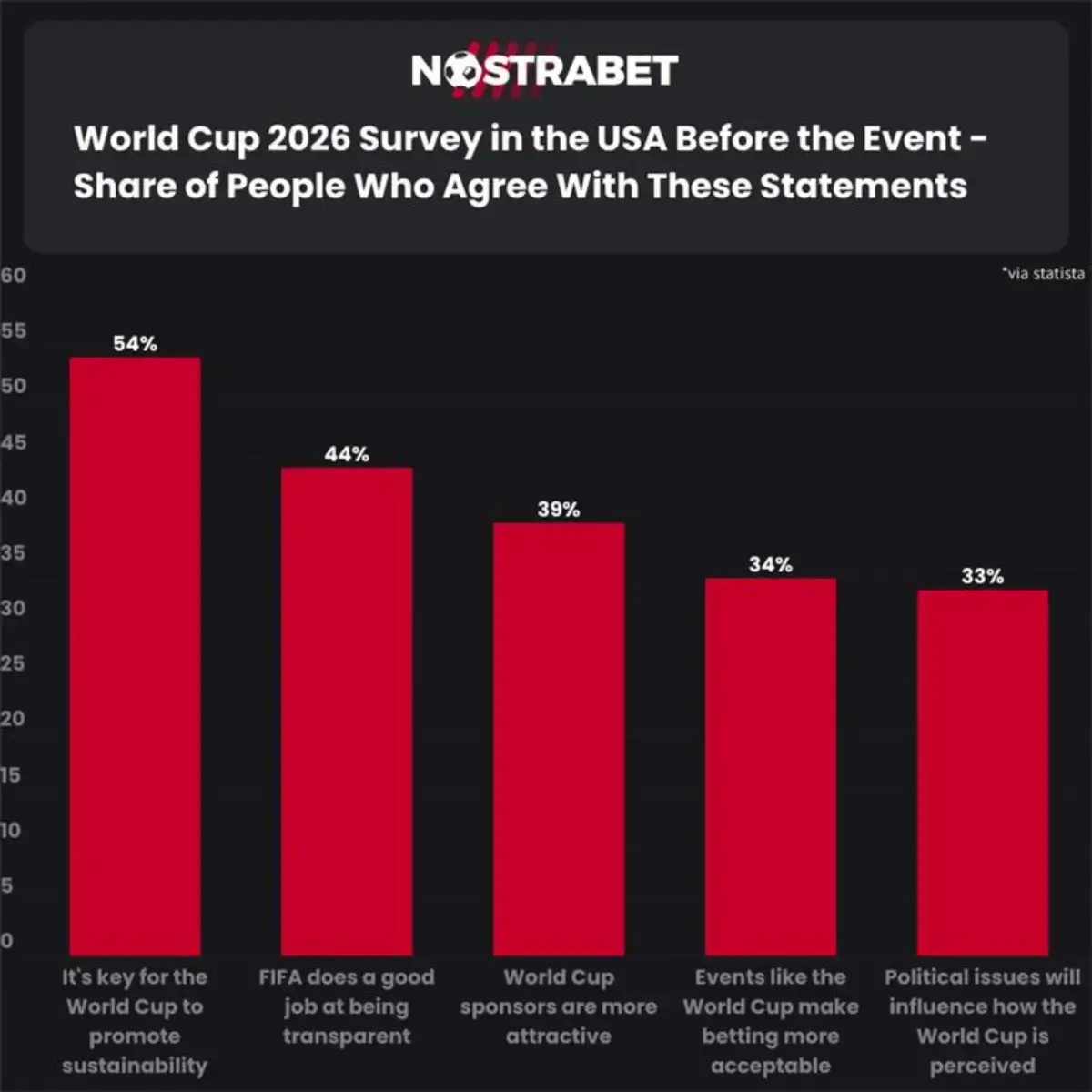
As I mentioned, only around 44% of Americans believe that FIFA is good at managing transparency. This will most likely not surprise many of you because the organization has had its fair share of controversies. Everyone remembers the past corruption scandals and questionable decision-making processes. Needless to say, this took a huge toll on FIFA’s public image.
The fact that such a low percentage of people believe in it shows that FIFA has issues. It’s safe to say that these statistics are not just a number because they reflect a broader sentiment. The organization faces clear credibility issues at a crucial moment. More than half of Americans (one of the host nations) don’t trust the body, and this is a problem.
Over the years, FIFA has suffered allegations of bribery, corruption and unethical practises. All of them have made headlines across the globe, including in the USA. FIFA definitely made reforms in an attempt to change how people see it, but this won’t happen easily. Once the trust has been broken, it takes a long time to rebuild.
Fans also have questions about the lack of communication. Most people have no idea how host cities are selected, how the sponsorship deals are made, or how the funding allocations are made. The fact that these processes are not clearly explained creates uncertainty, and it “breeds” distrust.
It goes without saying, but the FIFA 2026 World Cup will be a crucial event for the organization. It really needs to step up its game.
54% of People Want Sustainability
The second interesting stat from the survey is that 54% of people believe the FIFA World Cup should promote sustainability and social responsibility. It seems like fans are not just concerned about transparency because they also care deeply about the event’s impact. Football is not the most popular sport in the USA, but an event of this caliber will definitely boost it.
Whether FIFA will actually manage to achieve this is yet to be seen. As seen, a large percentage of Americans clearly do not believe the regulatory body. This means it will have a lot of eyes on itself, and there is little to no room for mistakes.
Sponsors, Money and the 39% Effect
Moving on to the next interesting stat from the recent survey, we have a question about sponsors. I found that 39% of respondents say companies willing to sponsor the 2026 World Cup will be more attractive to them. This is probably not surprising because companies spend insane amounts of money to be among the sponsors.
That said, companies have to be careful given the stats on FIFA’s distrust. When fans question the organization behind the big event, it can easily spill over onto the different brands associated with it. There is no arguing that companies can benefit from visibility, but they also have to be careful.
Just to give you some stats, some of the biggest sponsors pay FIFA close to $50M per year to be the sponsors. This includes bands like Adidas, Coca-Cola and Visa. The amount is huge, but this gives them huge global exposure.
If we move to some of the mid-tier sponsors, the amounts drop to around $25M per year. As for the lower tier, most companies pay close to $7.5M, which is still a lot of money. Unlike the rest, however, these are usually limited to specific countries or markets.
Gambling, Acceptance and the 34% Concern
Moving on to another interesting stat, we have the betting topic. Sports betting is huge in the US right now because the country has become the world’s largest market. There are still ongoing debates in some states about its legality, but the hobby has gained massive popularity lately. That’s why it should not be surprising that people spend a lot of money on it.
When asked about what they think, 34% of Americans say that the World Cup makes betting more acceptable. The stat is definitely interesting because it shows that some Americans are becoming more tolerant. It reflects a broader trend in sports, where gambling is becoming increasingly normalized.
If you want to bet on the 2026 FIFA World Cup, you can expect to find a variety of options. All big bookies in the USA will offer something special for it. I expect to find at least a few bonuses, such as free bets and odds boosts, as well as ACCA rewards.
I also would not be surprised if bookmakers decide to step up their game and come up with unique advertising campaigns. We could see different celebrities promoting them because brands know the tournament’s importance. I won’t be surprised if millions of Americans decide to put their betting skills to the test.
33% say That Politics Have Influenced How They Perceive the World Cup
Among the most interesting statements in the poll that I found was related to politics. Whether you like it or not, we can’t talk about the World Cup and not mention the current situation in the USA and around the world. The current president has been in the news pretty much daily, and the most recent conflict with Iran made the situation even more “interesting”.
I can safely say that this stat shows how global sports events are no longer just about sports. Things like social issues, government policies and international relations all have a role in how people view a given event. I also have to remind you that the 2026 FIFA World Cup will be hosted across 3 nations, so political dynamics are inevitable.
I won’t dive deep into the current topic, but let’s just say that the event will be interesting. Bear in mind that the current US administration issued a ban on a lot of people from entering the country. It turned out that some of them were also participating in the World Cup, so who knows what’s going to happen.
What Do All of These Numbers Mean for the 2026 World Cup
I can safely say that all of the numbers from the survey in the USA reveal an interesting picture. Interest in the tournament remains strong as people care about sustainability, sponsors, and the overall experience. However, the days of blind enthusiasm seem to be over because there are also many concerns. Fans are way more informed than before, more critical and more willing to question authority.
I think that the 44% trust ratio is definitely a wake-up call. FIFA needs to do something to show people that it can be trusted and it needs to act factually. Things like sharing data openly, communicating clearly, and addressing concerns are crucial. Failing to do this will increase people’s skepticism, and this could impact viewership. The latter is related to sponsorship value and the overall engagement.
The success of the 2026 FIFA World Cup will depend on a lot of factors. No one can deny that this competition could be historic, as it’s the largest tournament ever. It will feature a massive global audience at an unprecedented scale. When you also add the fact that we will see three different host nations, it’s easy to see why it’s “destined” for greatness.
The big question is whether FIFA will have the time to rebuild trust before the competition comes. I don’t really think this is possible because we are just a few months away, but who knows.
Closing Thoughts
Overall, the stats about the FIFA World Cup 2026 show that the tournament is a turning point. FIFA has the opportunity to make it the greatest football event in the world. The event can promote sustainability, showcase innovation and bring the world together. However, it will also be a huge test.
The World Cup will test FIFA’s trust, transparency, and the company’s ability to evolve. The fact that only 44% of Americans trust the organization is a signal that should not be ignored. We’ll just have to wait to see if FIFA will do anything about it.
Speaking of the event, the 2026 World Cup will take place between June 11 and July 19. We’ll see 48 teams from around the world playing in over 16 cities, so the event will be epic.
No comments added yet. Be the first!