


Only 36.4% of People in the US Bet Weekly – Is Sports Gambling Less Popular Than It Seems?



We can safely say that sports betting feels impossible to ignore in the United States today. The country has become one of the leading sports betting hubs in the world and is home to many top-tier bookmakers. The legislative changes allowed the industry to explode, resulting in tons of new people who started betting.
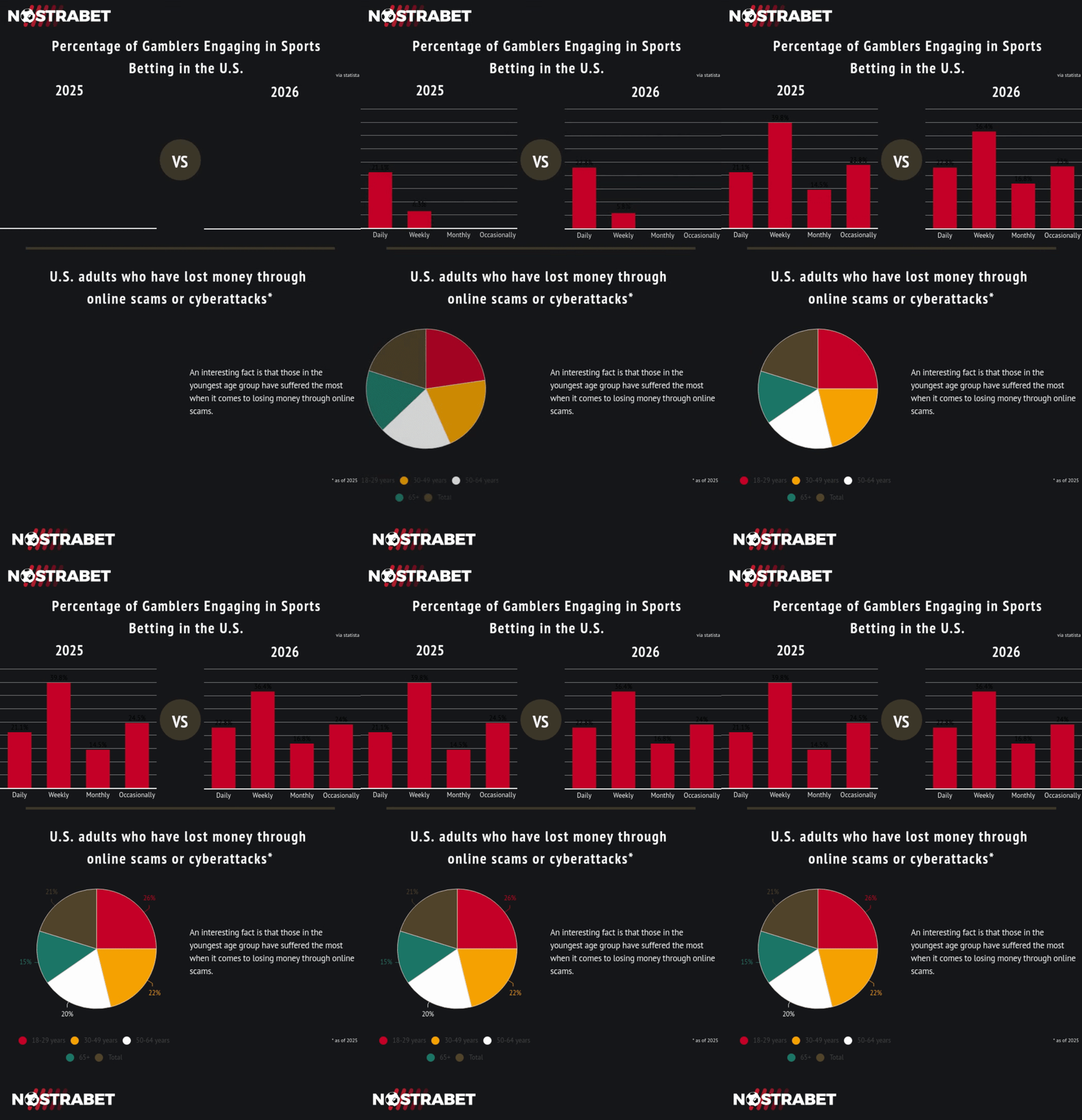
Despite the growing boom, however, the research from Nostrabet.com shows that only around 36.4% of people in the U.S. engage in sports betting on a weekly basis. The percentage of people who bet daily is even lower, and it’s around 22%. In other words, a large percentage of the population is not interested in betting at all, despite the fact that it seems like everyone is doing it.
But why is this the case? Well, the answer is more complex than it seems, so I will try to walk you through it. Before that, let’s analyze all of the recent data.
What Betting Frequency in the USA Really Looks Like
There is no arguing that millions of Americans have already tried sports betting at least once. The industry keeps growing, but the most recent stats I came across show a fragmented landscape when it comes to betting frequency.
As of 2026, around 22.8% of people place bets daily, which is slightly more than the same time last year (21.1%). The weekly bets, however, are down from 39.8% in 2025 to 36.4% in 2026. Around 16.8% of Americans place bets weekly (compared to 14.5% in 2025), and 24% wager occasionally (less than a month). This percentage was 24.5% in 2025.
These stats show an interesting trend – consistent engagement is far from universal. Weekly betting might sound frequent, but it still leaves the overwhelming majority of people outside the category. What’s also interesting is that this is the only category that has seen some increase from last year.
Judging by these stats, we can conclude that sports betting is not a widespread habit. Instead, it’s a selective activity where a group of regular users plays regularly. This means there is a gap between perception and reality, and I want to see why this is the case.
The Risk Factor
No matter what people or betting operators say, sports betting, at its core, involves risk. Some people like taking risks, but for others, this is the biggest deterrent. Yes, betting can be entertaining, but it carries the possibility of losing money, and it seems like most people do not like it.
There have been many studies that have proven people are loss-averse. What this means is that humans experience more pain from losing than pleasure from winning.
Considering this research, it’s no surprise that many casual bettors decide to quit shortly after they start betting. People often place a few bets, win some, and then inevitably experience a loss. The loss seems to be more “painful” because many quickly decide it’s not worth continuing.
On top of that, there is a growing awareness that many people who bet lose money over time. All of those things seem to put some people off from sports betting.
Lack of Knowledge and Complexity
The second reason why a small percentage of people in the U.S. place bets is the lack of knowledge. Even though sports betting may seem straightforward at first, it can be very complex, especially after you start betting regularly. You will come across all kinds of terms, odds formats and different features that you need to learn how they work before you start laying.
Fortunately, we at Nostrabet have all kinds of guides aimed at people with no previous experience. Those of you interested in learning how the industry works can find valuable information.
While some people are keen to learn everything, these aspects create a psychological barrier to entry. A lot of people hesitate to participate because they don’t fully understand what they’re doing. This also applies to people who follow sports regularly. Being a fan does not automatically mean you have betting competence, and it seems like most people are aware of it.
The complexity and lack of willingness to learn the ins and outs of the industry leave a lot of people on the sidelines. I would not be surprised if bookmakers come up with ways to make sports betting easier to understand for beginners.
The Perception that the System is Rigged
One of the key aspects people consider before engaging in any financial activity is whether they can trust it. Sports betting is no exception, and it seems like many people think that the system is inherently stacked against them. Yes, it is true that bookmakers operate with a built-in edge, but it does not mean the results are rigged.
Speaking of online scams, a recent study revealed that a large percentage of adults in the U.S. have lost money through such activities. A total of around 21% of the population has fallen victim, with the highest percentage being among those aged 18-29 (26%). Considering that this is also the most active age group for sports betting, it’s no surprise that many have trust issues.
The belief that the system is against them discourages participation. This is not really surprising because if the odds are perceived as unfair or unwinnable, there’s little incentive to engage.
Outside of the odds, people also have a hard time believing in different bonuses. Companies try to promote risk-free bets, and many people see them as misleading. This can further erode trust and reduce long-term engagement because users simply don’t trust the propositions.
Financial Constraints and Priorities
Let’s face it, money plays a huge role in the sports betting industry. Some people would happily engage in it every day, but they simply do not have the funds to do so. Nowadays, the U.S. has one of the highest living costs, so individuals prioritize essentials. It goes without saying, but sports betting is not one of them.
Some people believe that small bets don’t make a difference, but this is usually not the case. Users managing a tight budget have to be very selective about what they spend their funds. When you also add the fact that there is much more financial awareness now than before, it’s easy to see why some people simply don’t engage in sports betting.
The younger generations are very interested in concepts like investing, long-term planning, and budgeting. All of those things go hand in hand with betting, and it makes the latter less appealing.
Ethical Concerns and Stigma
Another reason why some sports fans do not place bets is because of stigma. Despite the growing acceptance, there are concerns about addiction and mental health. There has been a noticeable increase in people with gambling-related issues, and this has led to greater awareness of the risks.
We also have to mention the different cultural and religious beliefs. The U.S. is a melting pot when it comes to these things, but gambling is discouraged in pretty much every religion. As a result, many people decide not to engage in it at all.
I also have to address the skepticism towards the industry itself. You can find a lot of criticism that dislikes how operators market their services. They believe this creates unhealthy behavior, and this perception can lead people to distance themselves from it.
Some People Just Don’t Like It
If you look around, you will see a lot of people who claim that sports betting enhances their overall sports experience. This may be true for some, but it’s definitely not universal, and some people simply don’t like it.
Instead of enjoying a specific game, bettors often find themselves worrying about what is going to happen. We’ve all seen people who constantly check odds and feel frustrated or disappointed when something bad happens.
Outside of that, some people are simply not interested in any kind of gambling-related mechanics. You can find many who are risk-averse or less interested in this industry and prefer other forms of entertainment. Yes, sports betting can be an interesting way to engage with sports, but it’s not the most appealing for everyone.
Closing Thoughts
If only a small percentage of Americans bet on sports, why does sports betting feel so popular? Well, the answer lies in visibility. The small percentage of people who bet regularly are vocal about it, and sports betting companies spend millions on advertising. This constant exposure makes betting seem more common than it actually is.
We also have to say that social media amplifies these effects. It’s common to see people sharing their big wins and rarely discussing their losses. This definitely creates a skewed perception of success and draws in new players.
On top of that, frequent players tend to be more vocal about their activity. There is definitely a big community of people who like this hobby, but it’s not a dominant behavior for most people.
No comments added yet. Be the first!