


68% Want to Watch World Cup 2026 – But a Growing Minority Has Other Plans


There is no denying that the FIFA World Cup has been one of the most-watched sports events on the planet. The competition brings together billions every four years, and considering the new format and rules, we expect the 2026 edition to be one of the most popular yet. We will have 48 teams for the first time, and they will play across three host nations.
Speaking of popularity, Nostrabet.com found that the majority of people in most countries will likely follow the event. In Saudi Arabia, for example, 68% answered that they will be following the games, whereas the UAE is second with 59%.
Although the 2026 World Cup will definitely be a popular competition, other stats show that some people are willing to boycott it. For example, 13% of people in Germany answered that they are very likely to do that. It’s definitely interesting to compare these stats side by side, so let’s dive deep and learn more about the situation.
The New Format
As mentioned, the 2026 FIFA World Cup is the first tournament of its kind when it comes to the number of teams. Instead of having 32 participants as usual, FIFA increased the number to 48, giving more countries the chance to play.
Having more teams means we’ll see more matches, and most of the “new” teams are countries that don’t usually play at such an event. Consequently, this increases the tournament’s popularity and creates larger commercial opportunities. Sponsors, broadcasters and host cities will all benefit from the biggest World Cup ever staged.
Interest in the World Cup 2026 Remains Strong
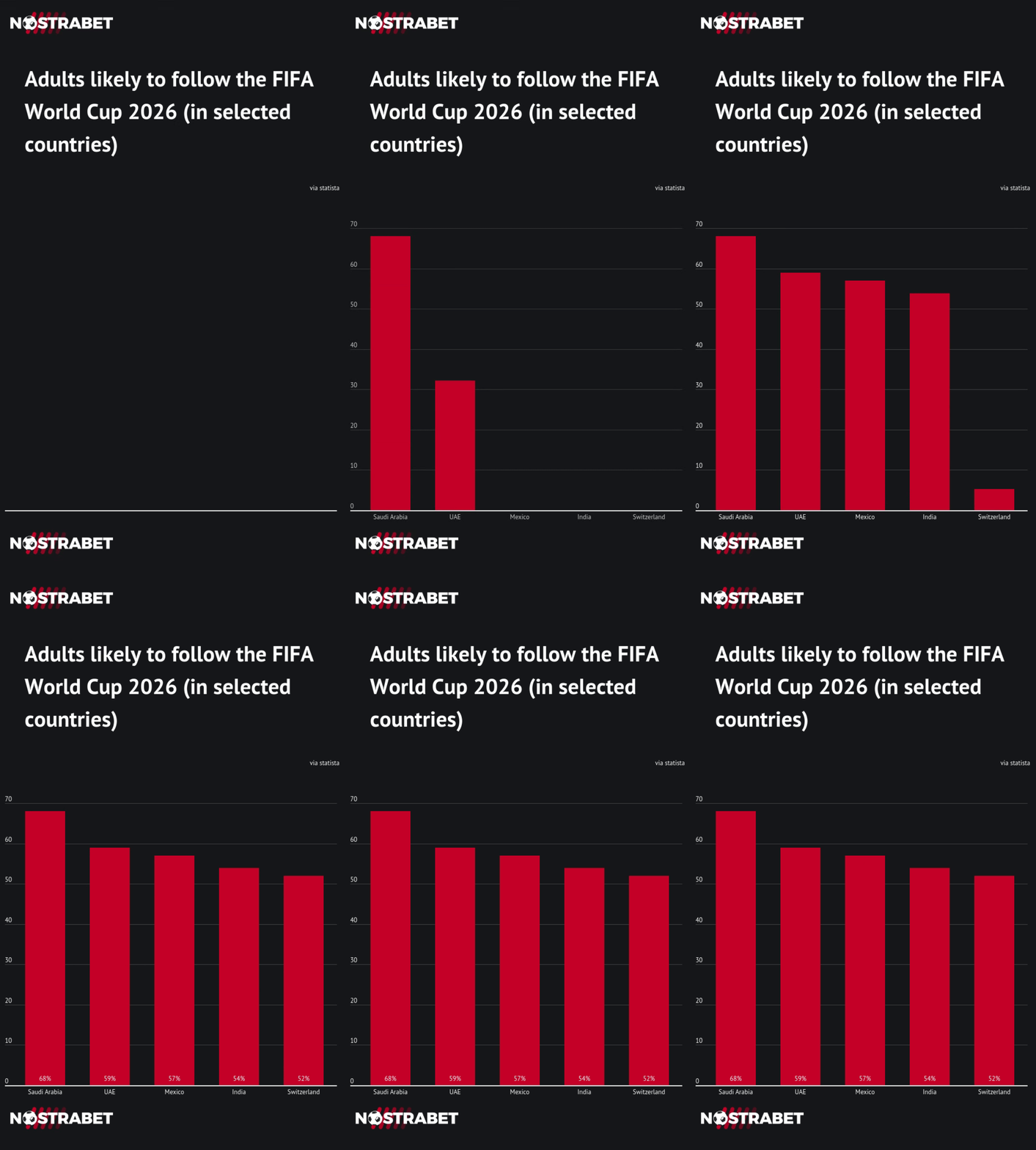
Let’s start with some positive statistics about the upcoming competition. As mentioned, people in some countries are much more excited about the 2026 World Cup than others. Saudi Arabia leads the chart because the survey shows that 68% of respondents will likely follow the event.
The survey also took place in many other countries and has some of the following stats:
- United Arab Emirates – 59%
- Mexico (one of the host countries) – 57%
- India – 54%
- Switzerland – 52%
- Spain – 48%
There are also several countries where this percentage is a lot lower. Consequently, the overall average across the surveyed markets is around 42%. This definitely shows that the interest in the tournament remains substantial in most parts of the world. Most of you are probably not surprised, considering that football is the most popular sport and the World Cup remains its premier event.
Why are Some Markets more Excited than Others?
People who follow the football scene worldwide are probably not surprised by the levels of interest in some countries. Let’s take Saudi Arabia as an example. The country has invested tons of money into football over the past few years and has attracted some of the best players from around the world. Moreover, Saudi Arabia is actively preparing to host the World Cup soon and become the 2nd country in the Middle East to do so.
Moving on to the UAE, the latter is in a similar position to Saudi Arabia. Football has become a major entertainment and cultural product there, and there are strong investments in infrastructure. I would not be surprised if the country is next on the list to host the competition in the future.
Mexico’s position near the top is also worth mentioning and probably the least surprising. Aside from being one of the host nations, Mexico is famous for its love of football. The country has an excellent team, and locals will be very happy to see it in action.
India’s position among the most interested markets is probably the country that surprised me the most. Cricket definitely remains the most dominant sport there, but it seems like football has steadily grown in popularity. I expect India to become a crucial hub for our favorite sport in the next couple of years.
The Other Side of the Story
There is no arguing that people in some countries are very excited for the FIFA World Cup 2026. However, another survey revealed rather alarming stats, showing that many people are actually willing to boycott the competition.
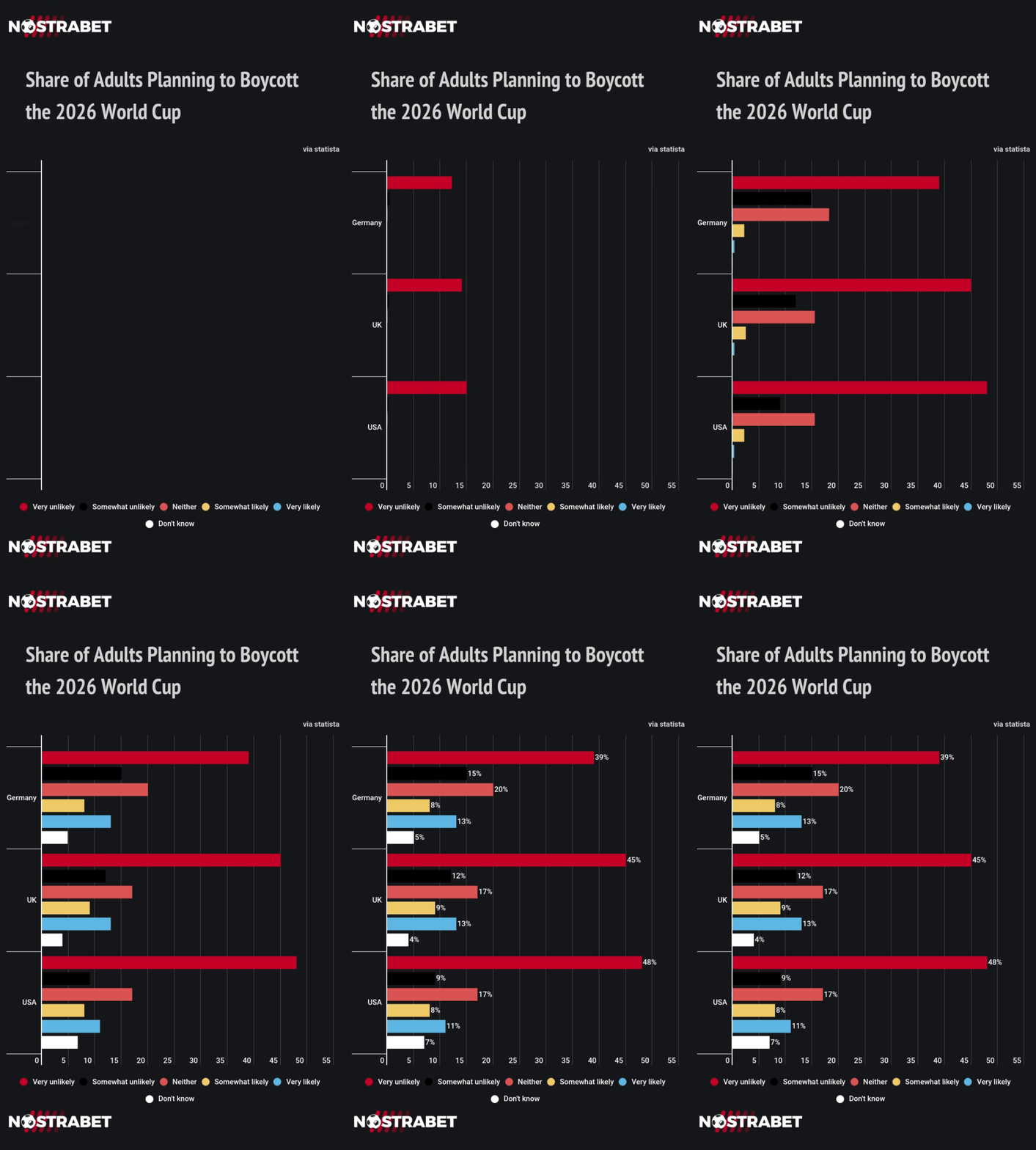
The survey was conducted in three countries – Germany, the UK and the USA, and the stats are very intriguing. Starting with Germany, 39% have answered that they are very unlikely to boycott the event, whereas 13% said they are very likely to do it. 15% said they are somewhat unlikely, whereas 5% said that they don’t know.
In the UK, 45% won’t be boycotting the competition, whereas 13% will very likely do it. 17% answered that they are neither likely nor unlikely, and 4% answered that they are not fully sure.
People in the USA seem to be the most excited about the 2026 World Cup, and for a good reason. 48% of people in one of the host countries will support the event, whereas 11% will boycott it. 17% answered that they will neither boycott nor support it, and 7% said that they do not know.
Overall, around one in five respondents will either boycott it or are open to that possibility. This group remains relatively small compared to the overall audience, but it’s definitely large enough to attract attention. This brings me to my next point.
Why Are Boycott Calls Growing?
Considering football’s popularity and the new World Cup format, many of you are probably wondering why so many people are willing to boycott the 2026 event. The answer to this question is a lot more complicated than it seems, and it is related to politics and social responsibility.
Whether we like it or not, modern sporting events no longer exist in isolation. Fans expect sports organizers to address broader issues, including governance and human rights concerns. Needless to say, FIFA has faced significant criticism in this area due to numerous controversies. Naturally, the media has amplified these discussions, and it seems like it has affected a lot of people.
When it comes to the 2026 World Cup, the political situation is definitely what makes the event controversial. The current U.S. president is a controversial figure in many parts of the world, and it seems like some people are willing to boycott the tournament because the majority of it will be held in the USA.
The situation with Iran also needs to be considered. People were unsure whether the country would attend the event due to the ongoing war, but judging by recent news, it will be there.
Considering the numbers I just listed, can we expect the boycott of the World Cup 2026 to actually stay? This is up for debate.
The Emotional Power of the World Cup
One reason boycott efforts often struggle when it comes to these kinds of sports events is the emotional significance of the competition. The FIFA World Cup is football’s most impressive tournament, and fans will feel great once their country wins a crucial match. Families gather around the television and friends organize watch parties, so the chances of a real boycott are slim.
Keep in mind that two of the countries where the boycott survey took place are Germany and the UK. Needless to say, both of them are well-known football powerhouses and have good chances of achieving solid results. Once their football teams start playing and secure important wins, fans will rally around them.
Supporters who miss out on the World Cup will feel like they are missing a once-in-a-generation cultural event. Of course, we will have to wait and see whether this will be the case.
What this Means for Sponsors
Companies that sponsor the FIFA World Cup 2026 spend millions of dollars, so they have to make sure they have good exposure. Considering the stats I shared so far, I think that they will definitely be happy with what is to come.
The brands investing in this year’s World Cup will likely reach hundreds of millions of consumers across multiple regions. Yes, they will have to take the boycotting fans into account, but even with them, they will reach out to loads of people.
In fact, I would not be surprised if some of the sponsors decide to acknowledge public concerns and address them. This will most likely give them an edge over everyone else.
The 2026 World Cup will be a test for FIFA’s Future
Considering everything I mentioned so far, the 2026 World Cup will serve as more than a football tournament. The competition will be a big test for FIFA’s ability to navigate an increasingly complex public environment. The organization has to try and make “everyone happy”, which is easier said than done.
Aside from delivering a successful tournament on the field, FIFA has to maintain trust among audiences. The surveys clearly show that there is a fairly large percentage of people who don’t believe in the organization. It will be very interesting to revise these statistics once the tournament is over.
The 2026 FIFA World Cup starts on June 11, and we will have the chance to watch the opening game between Mexico and South Africa.
No comments added yet. Be the first!