


80% of Sports Bettors Think They Can Make Money, Yet Only 3% Are Profitable — How to Improve Your Chances



In recent years, sports betting has become among the fastest-growing forms of gambling worldwide. The wide legalization, media coverage and refinement of mobile sportsbooks mean that it’s easier than ever to use a bookmaker. According to our research at Nostrabet.com, bettors in the United States alone have wagered more than $119B in 2023, and the numbers have skyrocketed ever since.
Despite the enormous scale of the market, one statistic reveals a striking contradiction in the psychology of sports betting. Our research shows that more than 80% of sports bettors believe they can make money. Sadly, industry analyses reveal that only about 3-5% of sports bettors are profitable in the long run. Therefore, most people who bet on sports actually lose money in the long run.
So why do so many people believe they can beat sportsbooks? And what separates the small group of successful bettors from the rest? Understanding these factors reveals some interesting data, so let’s dive into it.
Why So Many Bettors Believe They Can Win
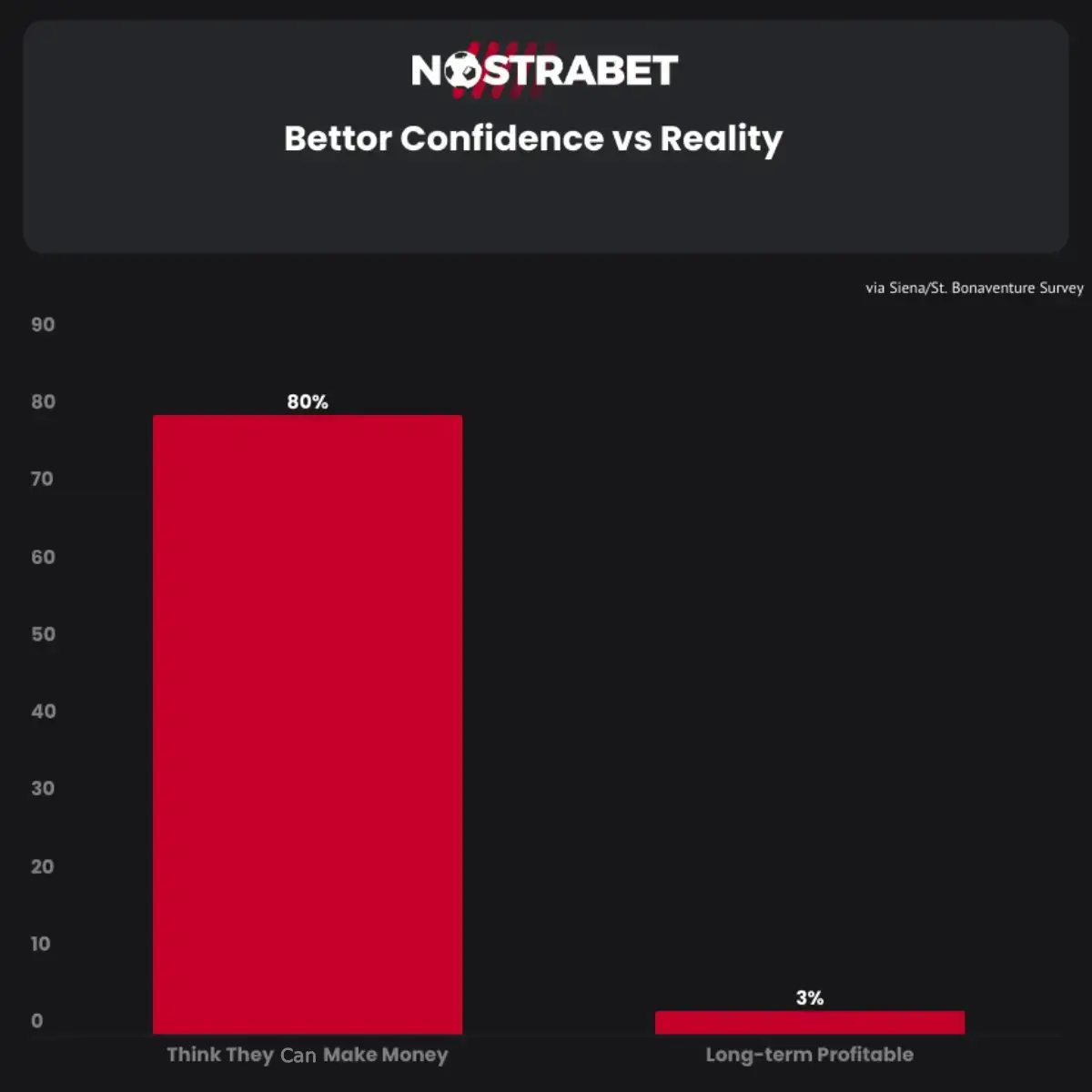
The stats do not lie – more than 80% of people who bet on sports are optimistic about the fact that they will win. It seems like one of the main reasons so many people believe in that is because of their sports knowledge. Unlike casino games, sports betting actually involves real-world events that fans follow closely. Punters can analyze team form, study player statistics, track injuries and follow trends.
Many people who already do that see betting as an extension of their sports knowledge. There are many studies that support this, including one from the Siena College Research Institute and St. Bonaventure University. According to them, a large number of bettors place wagers because they think the sports knowledge they have will help them profit.
It’s no surprise that social media and different betting communities reinforce this belief. People rush to share their big wins and large payouts online, and this motivates people to put their luck to the test. Needless to say, losing bets rarely receive the same attention. This selective visibility can make betting appear far more profitable than it actually is.
The Reality & Hidden Cost of Sports Betting
There’s no denying that player confidence remains high, but the bad news is the stats tell a different story. Many studies reveal that between 3 and 5% of sports bettors consistently generate profits. Around 5 to 10% break even, and more than 80% end up losing money.
The numbers show clearly that it’s difficult to beat sportsbooks consistently. Even people who appear successful in the short term will struggle to maintain profitability in the long run.
Another key statistic that can help explain why many people are unsuccessful in the long run is that people lose 7.5 cents for every dollar they wager. In other words, users who wager $100 end up losing $7.5. According to some researchers. Bettors expect to break even or even earn a small profit, and this is a clear gap between perception and reality. Ultimately, being profitable in sports betting is not that easy, and people should not assume they will be profitable in the long run.
Why Bettors Overestimate Their Chances
We already mentioned some of the reasons why people believe they will be successful, but this scratches the surface. Here are some of the most common reasons why bettors find themselves in this position:
- Illusion of Control – Sports betting involves a lot of data, expertise and analysis. People can research teams and players a lot, and believe this gives them more control over outcomes. Sadly, this is usually not the case. Sports results are influenced by many unpredictable factors, such as injuries, referee decisions, and even weather conditions. This creates the illusion of control, leading people to overestimate their ability to influence outcomes.
- Selective Memory – Bettors tend to remember their wins more than their losses. Over time, this bias creates an inflated perception of success, and it can be very dangerous. That’s why it might be a good idea to write down both your wins and losses.
- The Influence of Betting Culture – Modern sports betting culture also contributes to overconfidence. Tipsters, betting influencers, and online communities often highlight winning bets but rarely emphasize the losses that occur behind the scenes. All of this reinforces the belief that profitable betting is more common than it is.
Why Sportsbooks Still Win
People often spend countless hours reading different tactics, betting tips and other data, but in the end, sportsbooks almost always win. But why is that the case? Well, one of the big reasons is the built-in profit margins.
Every betting market includes a betting margin built into the odds, which people often call the “big”. Each margin is different, but our experience shows that most fall between 5% and 7%. Even if people decide to split evenly between two sides of a bet, the margin allows bookies to generate consistent profits over time.
Market efficiency is another reason sportsbooks remain successful. Thousands of people analyze the same information before betting on some of the more popular options. Users think that this gives them an advantage, but often forget that bookmakers also have access to this data. As a result, operators usually take it into account and adjust the odds.
There are even studies that reveal that bookmaker pricing in major markets usually leads to negative expected profit for bettors. This means that sportsbooks are usually very good at setting accurate odds, and it’s unlikely to beat them at their own game. There are exceptions, however, especially when people bet on more niche options like esports and have the needed experience.
How Bettors Can Improve Their Chances
Ok, so we’ve seen that bookmakers have the upper edge, and most people actually lose money in sports betting. Beating bookies consistently is very difficult, but some strategies can help punters improve their chances or reduce losses, and we’d like to share more about them.
For starters, we believe that punters should focus on value betting. Instead of simply predicting winners, experienced punters have to look for odds that underestimate the true probability of an outcome. Wagering on such options over time can consistently improve long-term results. The only problem is that it’s becoming much harder to find such opportunities, especially when wagering on mainstream sports.
The second tip that can improve your chances of succeeding is to avoid high-margin bets. Some research shows that certain markets can have margins above 40%, which means they are not worth trying. Our experience shows that large parlays, heavily promoted betting specials, and novelty markets usually fall into this category.
Bankroll management is next on the list, and it’s an essential step you have to master. Professional bettors usually risk only around 1 to 3% of their bankroll per bet, and this helps them survive the inevitable losing streaks. This is a disciplined approach that prevents a single bad run from wiping out an entire betting budget.
Lastly, you have to compare odds across different sportsbooks. Even small differences in odds can significantly affect long-term results. This is the big reason why people who bet on sports regularly usually use more than one sportsbook.
The Role of Discipline and Emotional Control
Another crucial factor that separates profitable bettors from the majority of players is how they control their emotions. Many underestimate this, but sports betting can be highly emotional, and this means people can end up making wrong decisions.
Among the most common mistakes that people make is chasing losses. After suffering a big loss, people decide to increase their wager in an attempt to recover what they’ve lost. The bad news is that this rarely works, and the approach can quickly lead to larger losses and even a complete wipeout.
Another big emotional mistake is becoming overconfident after a winning streak. A few successful bets can create the impression that a better has found the winning formula. Sadly, short-term success in sports betting often involves a lot of luck, so you need to remain cautious even after profitable runs.
Being disciplined also means setting clear limits, and most successful bettors know that.
Closing Thoughts – Sports Betting is Definitely Harder Than It Looks
As we said, sports betting remains popular and continues to grow in many parts of the world. More and more people are deciding to start betting daily and believe they will be successful, but the stats are clear. Even though 80% of people think they can make money, only a small fraction actually do.
The combination of sportsbook margins, efficient betting markets, and psychological bases makes consistent profits difficult. Yet there are different steps people can take to increase their overall success. People who approach sports betting with discipline can improve their chances and avoid some of the most common pitfalls.
No comments added yet. Be the first!