


Germany’s Online Gambling Market in 2026 – Billions in Growth & Billions at Risk


As of 2026, Germany represents one of the most complex and tightly regulated online gambling markets in Europe. Considering it’s Europe’s largest economy, the country is an attractive destination for all online gambling operators.
According to the data from Nostrabet.com, the total gambling market in Germany generated more than 14.4B EUR in 2024 alone. Needless to say, the number will keep increasing in the future as more and more sites enter the legal market there.
We think Germany is a key player in Europe’s online gambling industry, which is why it’s time to dive deep into the local market. We will analyze things like regulatory structure, consumer behaviour and more.
The Size of the Market and Revenue
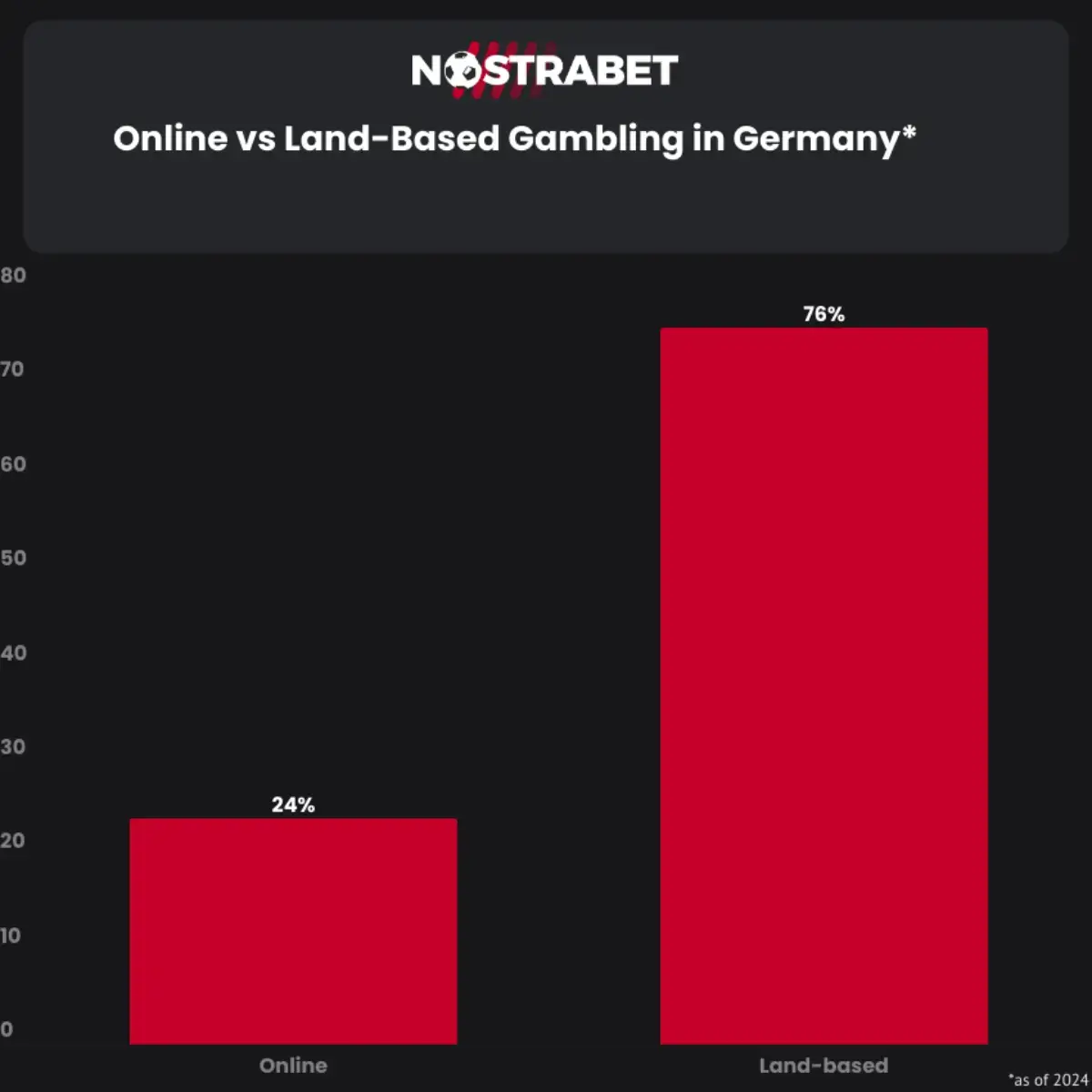
It probably comes as no surprise that the gambling market in Germany is substantial in both online and land-based operations. Out of the 14.4B EUR revenue in 2024, close to 3.5B of that came from online gambling. In other words, iGaming represents a significant portion of the overall gambling ecosystem, but (at least back then) remains smaller than the land-based segment.
If we look at the data head, estimates suggest the German gambling market will reach close to 18B EUR in 2026. It’s no surprise that the online segment is also growing rapidly and could reach up to 5.2B EUR (these are not hard facts but rather estimates based on the current situation). In other words, online gambling will account for close to 30% of the total gambling revenue.
While these numbers are impressive, it’s worth noting that the growth is slower than in less-regulated markets. The main reason is compliance constraints, which we will cover in a bit.
Growth Trends and Forecasts
Most of you are probably not surprised that Germany’s long-term projections remain optimistic. Assuming current growth continues, forecasts suggest the online gambling market will reach close to 10B EUR by 2030. This means an annual growth rate of up to 12%.
There are many factors behind the growth, but the main ones include:
- The industry’s overall popularity
- Widespread smartphone adoption
- Improved digital platforms
- Better iGaming products
Despite these advantages, Germany is underperforming its potential. We firmly believe that the strict and somewhat confusing regulations are the reason behind it. Operators wishing to provide their services here must follow more rules, and players also have multiple limitations.
Gambling Regulation in Germany
As of 2026, Germany’s main gambling framework is the so-called Glücksspielstaatsvertrag from 2021. This is the law that basically legalized online sports betting, virtual slots and poker. Although this was a step in the right direction, we should note that the new legislation also comes with loads of consumer protection measures.
For example, there is a maximum deposit limit of 1000 EUR per player per month (it may be increased up to 10k EUR in some instances). Authorities also demand mandatory participation in the OASIS self-exclusion system. Operators also have to follow different advertising restrictions, and there are also gameplay limitations on slots.
All of these rules make the German iGaming market among the most regulated in Europe.
The Role of the Unregulated Market
Considering there are so many rules that operators and players must adhere to, it’s probably not surprising that there is a large black iGaming market in Germany. Some of the stats suggest that illegal online gambling is responsible for around 25% of all activity. The number may seem high, but industry stakeholders (including operators) believe it is even higher.
Considering there are so many regulations in place, people are looking for ways to enjoy what they like. Unless the country changes its approach, we expect the black market to remain significant. As of now, it’s strongest in the most restricted product categories.
Tax Revenue and Economic Impact
Germany has the largest economy in Europe, and it seems like the gambling sector makes an important contribution to it. Going back to the data from 2024, the stats show that gambling generated close to 7B EUR, and the direct gambling tax revenue reached almost 2.5B EUR in recent years.
These numbers seem pretty good, and they are, but the truth is that offshore gambling creates huge revenue leaks. We already mentioned that the latter is responsible for close to 25% of all activity, and that is not taxed domestically. It’s no surprise this has become a central argument in ongoing policy discussions, so we expect to see some changes.
Sports Betting Leads and Slots are Behind
As of 2026, sports betting remains Germany’s latest segment. This will not surprise most people reading this because the country has a strong demand linked to the most popular sports. Football, for example, is incredibly popular in Germany and the latter has one of the strongest domestic leagues.
Online casinos and slots in general also have many fans, but they remain limited due to regulations. Assuming there is a change in the options they can provide, we expect them to increase in popularity drastically. The most recent data shows that online slot wagers have exceeded 1.1 billion EUR per quarter.
Online poker also has its fans, but it remains much smaller than the rest.
Consumer Behaviour – The Current Situation
The stats related to the gambling behaviour of Germans are more or less in line with the broader European trends. In fact, there was a survey from the Glücksspielin in late 2025 that revealed close to 36.4% of adults participated in some kind of gambling within the past 12 months. Around 10.8% of the played exclusively online, which is a bit lower than some of you may have expected.
Overall, Germany’s “gambling population” is mostly based on the younger demographics. Players have more demands than before and are looking for seamless mobile betting experiences, live and interactive games and instant in-play formats.
When it comes to platform choice, most users prioritize convenience and flexibility. These two are among the reasons why offshore gambling continues to be popular in Germany. Most sites that run without a local license are much more flexible than their regulated counterparts.
Problem Gambling in Germany
The growth of the gambling sector worldwide has resulted in more problem gambling cases. Germany is no exception here, and the latest data from the Glücksspiel proves it. As of 2025, close to 2.2% of adults between the ages of 18 and 70 have had some kind of gambling disorder. The percentage may not look that high compared to other countries like the UK, but it’s not low, especially for such a regulated market.
The stats reveal that the risk levels of having some kind of gambling-related issue depend on what you play. For example, online slots pose the highest risk because around 32.5% of people have shown problematic behaviour. Live sports betting is next on the list with 27%, followed by gambling machines with a 23.4%.
The statistics are clear- high-frequency gambling formats remain the central focus of regulation. The big issue is that if many of these problem gamblers decide to move to offshore sites, the protective measures will lose their effectiveness. German authorities will have to figure out ways to avoid this form happening.
Germany’s Market is Defined by Balance
Overall, we can say that the gambling market in Germany is defined by tension. It’s one of the most stable markets with strong demand. That said, these rules must make sure that they don’t undermine themselves by pushing players away from the legal market. By the looks of it, this will be the biggest challenge for local regulators.
Assuming Germany decides to keep refining its gambling sector, we expect to have improved channelization. There will also be strengthened enforcement against illegal operations, as they remain a major problem for the country. Sadly, it is becoming increasingly difficult for regulators to “fight” against these sites as they are becoming more innovative.
Some governments around the world have increased efforts to block illegal operators by imposing payment restrictions. Sadly for them, offshore operators continue to adapt quickly to the situation. For these reasons, policymakers will have to reconsider some current restrictions and find a better balance in the future.
Closing Thoughts
If we had to sum up the German gambling market as of 2026, we could say it is mature and highly regulated. However, it is also functioning below its full potential, so we expect this to change.
The data we found shows that the gambling market plays a significant role in the country’s economy. With that said, it also reveals that there is a problem with offshore gambling because a lot of players choose it over regulated sites. Germany’s authorities will have to find ways to keep players inside the system, and it definitely won’t be easy.
No comments added yet. Be the first!