


Only 5% Will See the 2026 World Cup Live – The Stats No One Talks About


We are getting really close to the beginning of the 2026 FIFA World Cup. Football fans worldwide are preparing to watch the best teams in the world go head ot head, or at least that’s what we’d like to think.
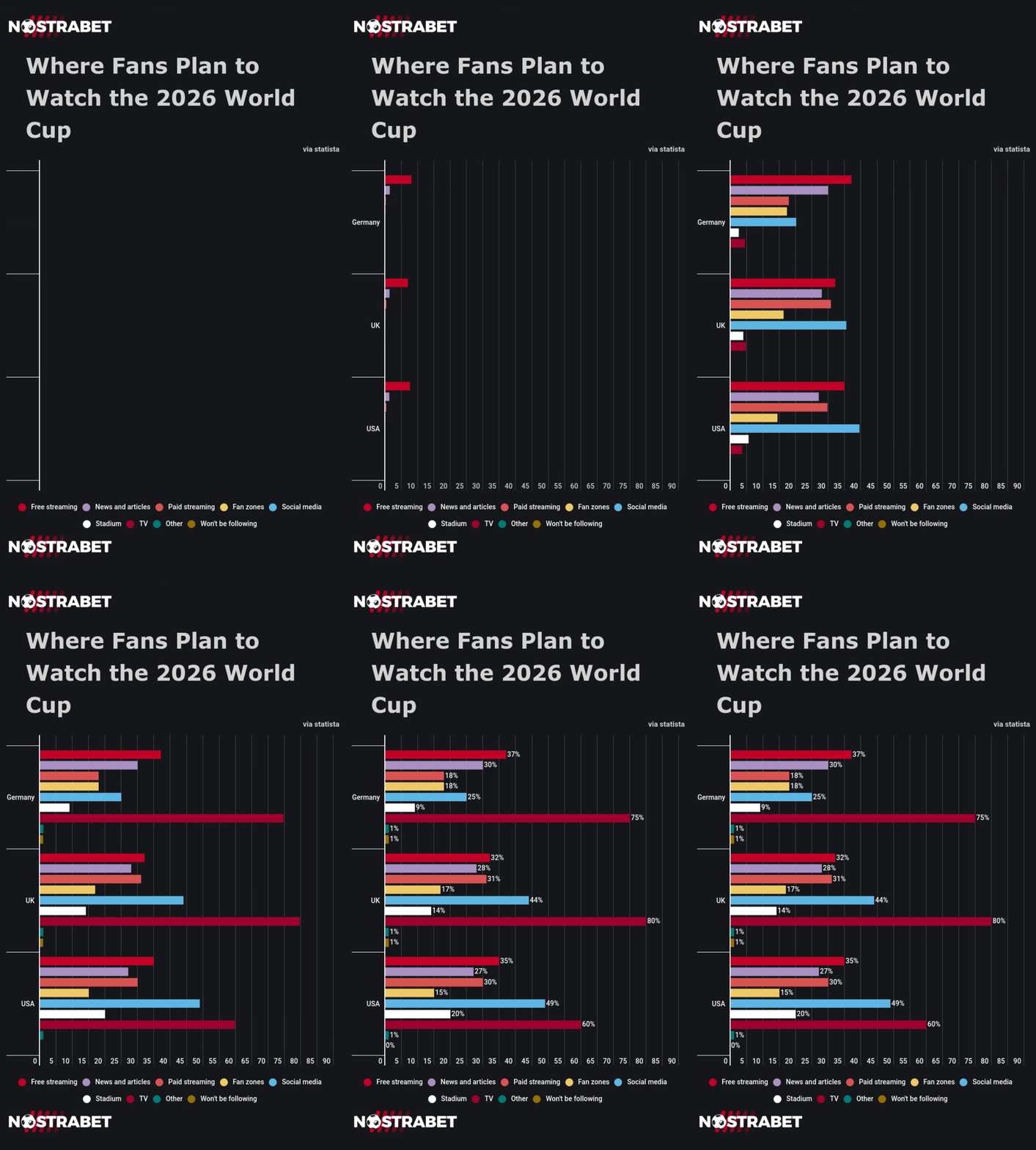
According to Nostrabet.com’s research, only a small percentage of fans in some countries are watching matches live. Most people won’t be able to attend stadiums and will use other ways to watch the matches. For example, close to 80% of the UK fans will watch it on TV, whereas only 14% will try to follow their favorite team.
The studies conducted in Germany, the UK and the US reveal an interesting story, and I am about to show you everything you need to know. Let’s see how fans feel about the most important football competition in the world.
TV Remains the Most Popular Way for Fans to Watch from Home
There is no denying that the number of people using streaming services and social media to follow various sports events is increasing. Despite that, TV remains the most common way for people to watch the 2026 World Cup.
According to studies, around 80% of U.K fans will use their TVs to follow the games. The percentage in Germany goes down to 75%, whereas 60% of Americans plan to do the same.
Considering all of the tech innovations, some people wonder why TV still dominates. Well, the simplest answer is that it’s because of shared, communal experiences. Friends can easily gather around the TV and enjoy the thrill of all live matches. All TV channels that will broadcast the biggest football event will hire professional commentators. There will also be instant replays, in-depth analyses, and these two add layers to the viewing experience.
Needless to say, sponsors are fully aware that people will use their TV to watch games. As a result, they are willing to pay exorbitant sums to broadcast their ads. Many studies have shown that the so-called prime-time TV slots during the World Cup are very effective. They allow companies to reach billions of viewers worldwide.
Social Media is No Longer Just for Highlights
Even though the TV remains the go-to option for most fans, social media is definitely catching up. I can say with confidence that social media has transformed how fans experience football. Thanks to different platforms, people can follow the news in real time, and it seems many find it very convenient.
The stats from the survey reveal that Americans (49% of them) are the ones who will use social media the most for the upcoming event. The UK is once again second with 44%, and Germany comes third with 25%.
All of the big modern platforms allow fans to share directions, discuss the different matches and even follow live commentary. Most passive spectators will likely become active participants, making the World Cup even more popular.
When talking about social media, I have to remind you that FIFA has a contract with TikTok for the upcoming 2026 competition. This shows that football’s most important regulator acknowledges the importance of social media. Billions of people use these platforms daily, so this partnership will make the event even more popular.
Streaming Services are Gaining Ground
Although using the TV seems more convenient, streaming has become a significant part of “World Cup” consumption. The stats reveal that some of the free streaming platforms will welcome around 35% of Americans, 31% of UK fans and 27% of German fans. Interestingly, paid streaming services also have solid fan attention, ranging from 18% to 39%.
One of the biggest advantages of streaming platforms is their accessibility. Yes, the TV might be more convenient at home, but people on the go have a much easier time watching the games from their phones and laptops.
Some of the more advanced paid platforms will even offer multi-angle viewing, enhanced commentary, and exclusive content. All of those things seem to become more appealing because the percentage of football fans who will watch the matches on them increases over time. The percentage of people who choose streaming platforms will likely increase over the next couple of years.
Keep in mind that many stats reveal the total media engagement for the FIFA World Cup 2026 will reach almost 6B people. This is 1B more than in 2022, indicating that more people are interested in the competition.
The Public Viewing Zones are Fun but Not Mainstream
Outside of actually watching the matches at the stadium, doing so in public spaces or fan zones can be really fun. I personally think this is an excellent way to have fun, but it seems like most people in Germany, the UK and the USA prefer other options.
According to the survey, 15% of people in America, 17% in the UK, and 18% in Germany will watch the FIFA World Cup 2026 using this method. These will most likely be the biggest football fans who could not attend the competition for whatever reason.
Those of you who attended the viewing zones know that they can be awesome. You can often find huge screens, live music and special food stalls that create a festive atmosphere. Sadly, things like logistical challenges, ticket limits, and other factors keep the numbers lower than at-home viewing.
Stadium Attendance – The Shocking Numbers
Considering that the 2026 FIFA World Cup will be the largest event in history, you’d expect millions to watch the matches in the stadiums. There will most likely be a lot of people there, but the survey stats show an interesting picture.
According to the statistics, only 20% of Americans will attend the stadiums. This number is shockingly low, considering that the USA is one of the hosts and it’s in an interesting group. Yes, it’s true that “soccer” isn’t as popular as other sports there, but we expected to see more here.
Moving on to the UK, 14% of fans will watch the matches. Germans last because the stats show that 9% will attend matches in person.
There are several factors that explain this situation. I already mentioned the sport’s popularity in the USA, but we also have to address the ticket prices. There have been many reports that reveal the World Cup 2026 tickets are very expensive. When you also add the travel costs and accommodation in host cities, a single game can cost several thousand dollars.
Outside of the financial side, attending live matches requires a significant time commitment. People will have to take days off work, and the numbers show it’s not that easy. For most fans, watching from home seems much more convenient and accessible.
Reading Articles and News Remains Trendy
Those who want to keep track of what’s going on at the FIFA World Cup 2026 but don’t want to watch live matches often read news and articles. That’s why I was not surprised that there is a fairly large percentage of people in each of the three countries I discussed who will do that.
Starting with the US, around 27% will read news and articles. The UK is next with 28%, followed by Germany with 30%. The high percentage could also include people who simply can’t watch the matches in real time. Thankfully, sites like ours let them stay connected and engaged, even if their schedule or location doesn’t allow them to keep up with the competition.
Statista’s survey also had an “Other” category, where all countries scored 1%. What’s also interesting is that 1% in the UK and US said they won’t follow the World Cup, whereas 0% of Germans gave that answer.
How Viewing Habits Have Evolved
Fans who have been following the World Cup for years know that people’s viewing habits have changed. If we look at the 2010 and 2014 World Cups, for example, we can see that stadium attendance was higher. Nevertheless, TV remains the dominant platform for people worldwide.
Streaming platforms had little impact on the overall experience in earlier tournaments. Nowadays, they have become much more popular because there are more options to choose from.
We also have to remember that social media usage has exploded in the last few years. The number of people using social media has increased drastically over the last couple of years, so many spectators have become active participants.
The way things are going, the 2026 FIFA World Cup will become the most digitally consumed tournament in history.
How Does All of That Affect Online Betting?
Considering how fans will “consume” the 2026 World Cup, it will have a huge impact on the online betting industry. There will be fewer people attending matches in person, so betting operators have more opportunities than ever to engage audiences in real-time.
The fact that so many people will watch from home suggests live betting will be very popular. Fans watching matches from home can react to every moment and place bets in real time. As a result, I think that bookmakers will provide more live betting options than ever before.
The same is true for mobile betting. Sites that allow users to wager on the go via apps and mobile sites will step up their game. I expect to see even better optimizations and loads of mobile-exclusive betting promotions.
Closing Thoughts
The fact that the FIFA World Cup 2026 will bring together 6 billion people speaks for itself. We have already seen how fans will follow the competition in selected markets, so the numbers will be roughly the same in other parts of the world.
It is safe to say the 2026 World Cup will become the most connected and digitally consumed event ever. Be ready for it because the action kicks off on June 11, 2026.
No comments added yet. Be the first!