


24% of European Football Sponsorships Come From Betting Companies — The Other Industries Behind the Game May Surprise You


Everyone knows that football is a lot more than just a sport, especially in today’s world. Behind every match, there is a much larger business ecosystem that involves sponsors, tech companies, financial institutions, and even betting companies.
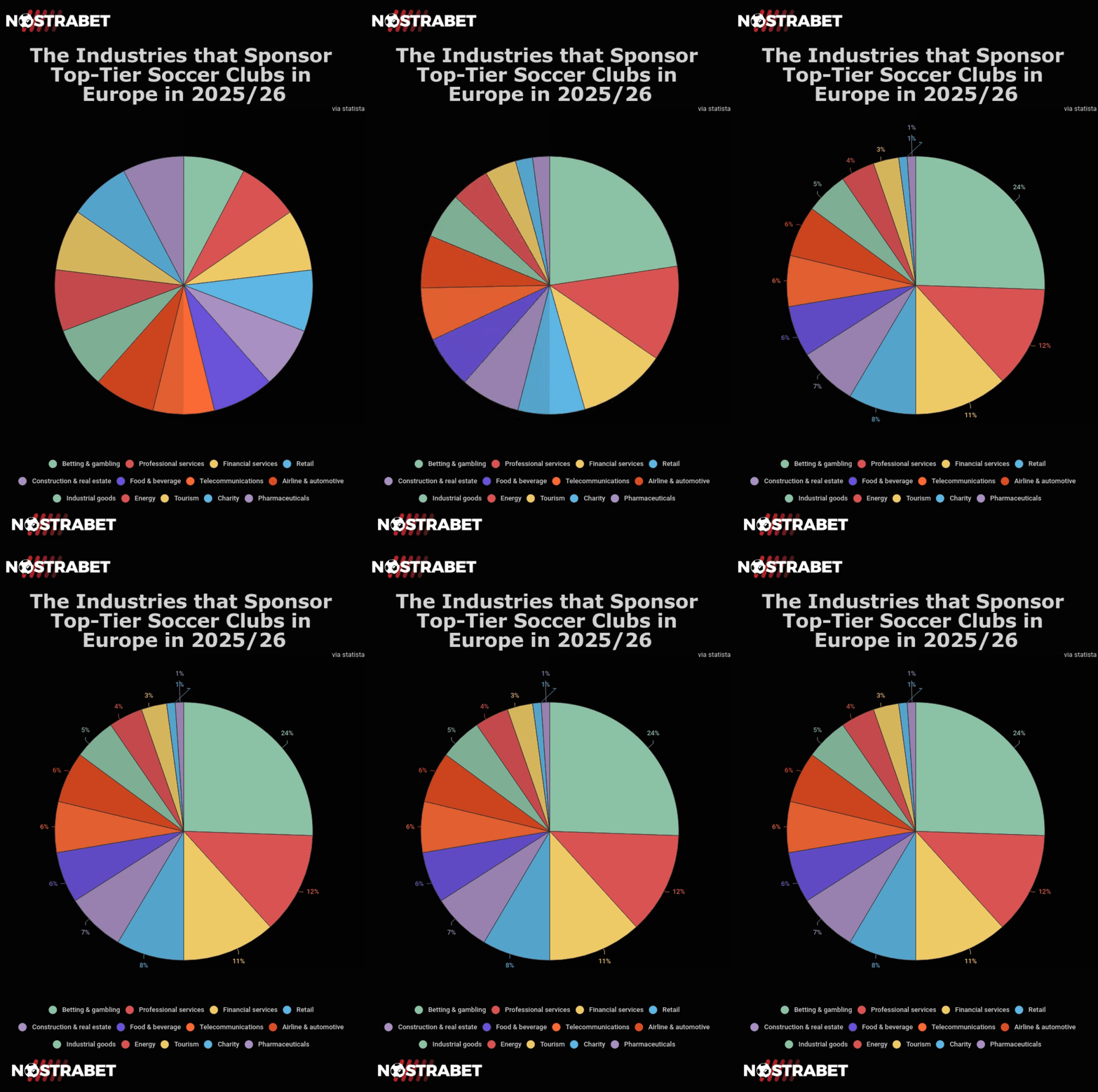
Given that billions of people watch football every year, it is not surprising that many businesses are keen to sponsor the sport in some way. The Nostrabet.com team and I decided to dig deeper and found interesting data about football sponsorship from UEFA. Based on that data, 24% of all sponsorship in the sport in the 2025/26 season comes from betting companies.
It’s clear that the impact of these companies is huge, but they are only a part of a much bigger sponsorship landscape. The stats reveal that football attracts all kinds of different businesses, and this article will go over each one.
Football Sponsorship by Numbers – The Industries that Invest in the Sport
European football is a global powerhouse in terms of sponsorship and popularity. Some of the biggest clubs have become far more than just sports organizations because their audiences extend far beyond their home countries.
Sponsorships play a crucial role in this business model, as clubs partner with a wide range of brands to generate additional revenue. The table below shows all the data I came across.
| Industry | Share |
| Betting & gambling | 24% |
| Professional services | 12% |
| Retail | 8% |
| Construction & real estate | 7% |
| Food & beverage | 6% |
| Telecommunications | 6% |
| Airline & automotive | 6% |
| Industry goods | 5% |
| Energy | 4% |
| Tourism | 3% |
| Pharmaceutical | 1% |
As you can see, betting companies are leading the chart, but football sponsorship is not dependent on a single industry. Instead, it attracts different businesses from almost every major commercial sector. Companies are fully aware that the sport creates global visibility, and they want to take part in that.
Why are Betting Companies so Strongly Connected With Football?
Although you can see that European football attracts sponsors from all kinds of sectors, betting is the clear leader. The relationship between it and football has always been close because they overlap in many ways.
Football, as a sport, is built around predictions, uncertainty, statistics, and emotions. All of these elements also apply to sports betting. This is also the sport where people can always find tons of different matches, and this provides constant engagement for betting operators. People can access different domestic leagues, European competitions and international tournaments, so there is always something to choose from.
The fact that some of the biggest EU clubs have fans worldwide means that people always talk about them. Consequently, betting companies that sponsor them put themselves in a position where they can also appear in discussions across social media and fan communities. The overall exposure these businesses get is hard to beat, as football allows them to reach audiences across multiple markets simultaneously.
How do Betting Brands Work with Football Clubs
A lot of people assume that the only way in which betting companies collaborate with a football club is by having its name on their shirts. Even though this does help a lot, modern partnerships between the two go far beyond short branding.
Depending on the situation, you can find things like official betting partner agreements, stadium advertising and digital campaigns. In some cases, clubs and betting companies can also engage in content collaborations, social media partnerships and fan engagement initiatives. This allows them to have a deeper connection with supporters.
Another major advantage of these sponsorships for betting campaigns is their credibility and recognition. Brands taking their first steps in the betting industry can gain significant visibility and customer awareness by partnering with a major football club. Although this alone can’t guarantee the site is legit, it’s definitely a step in the right direction, and companies know that.
The stats do not lie – I analyzed 442 clubs across a total of 31 different EU top divisions and found that 296 of them have at least one gambling-related sponsorship agreement of some kind. The stats are clear – the two industries go hand in hand.
The Other Industries Behind European Football Sponsorships
It’s clear that betting companies represent the largest sponsorship category; you have a lot of other roles that play a major role in the financing of the sport. Let’s do a quick overview of some of the most important ones.
Professional Services
These account for around 12% of all European football sponsorships and are the second-largest category. This is a broad term that contains industries such as tech solutions, legal services, consulting and corporate support.
Many of the biggest football clubs in Europe operate like international companies and require expertise in many areas. This is where the professional services come in handy.
The football sponsorships give companies access to a worldwide audience that would have otherwise been almost impossible to reach. Furthermore, it gives them the opportunity to associate their brands with different successful organizations.
Financial Services
Financial services are next on the list of EU football sponsorships, at 11%. They include businesses such as banks, financial companies and payment providers. Truth be told, they have always been closely connected with big sports in one way or another.
What’s interesting about the financial services and their sponsorships with football is the emotional connection. The fact that the big EU clubs are huge and fans develop strong relationships allows companies associated with them to benefit from increased recognition and trust. These two components are essential in the world of finance.
Perhaps the most popular partnership between financial services and European football is MasterCard’s deal with the UEFA Champions League. The deal started in 1994, making it one of the longest-lasting partnerships in football.
Retail and Consumer Brands
Retail and consumer brands come next with 8%, and they have also recognized football’s marketing power. You can see all kinds of brands, including clothing companies and consumer product companies. They leverage football’s popularity to reach diverse supporters who develop strong loyalty to brands associated with their favorite teams.
Football is one of the sports that provides repeated exposure, as fans can see a given company’s name many times. This creates familiarity and long-term brand recognition and is one of the reasons why companies are keen on “investing” in this sport.
Tech and Innovations are Becoming More Important
An interesting fact is that tech companies have an increasing involvement in football sponsorships over the last couple of years. Many clubs are investing in major digital platforms, data analysis, and AI to improve fan engagement. This has created new opportunities for tech brands to become important partners.
Considering how things are changing, I expect to see a lot more collaborations between football clubs and big tech companies. We can already see that happening because Kalshi and Polymarket, two of the leading prediction market sites, are investing heavily in different sponsorship deals in the USA. They are yet to make a big move in European football, but I think it’s just a matter of time before it happens.
Regulations & The Future of Betting Sponsorship
All of the data mentioned here is from the 2025/26 competitive football season, but the new one is already here. While betting companies remain the go-to sponsors of football, they face a changing sponsorship landscape.
Some European countries decided to introduce stricter rules regarding this kind of advertising. The idea is to limit people’s exposure to gambling companies because the number of users who develop gambling-related problems has been on the rise. Additionally, some football clubs have started reviewing how betting partnerships are presented to supporters.
The Premier League is probably the best example here. A decision was made that clubs won’t be able to have any gambling companies as front-of-shirt sponsors starting from the 2026/27 season. The good news is that other forms of partnerships remain available, but it’s still a major blow for many brands.
Due to these restrictions, some gambling companies will think twice before investing large amounts into football. The clubs, on the other hand, will also be reluctant to enter into such agreements and may look to other industries. This includes tech companies, financial platforms, entertainment brands and global consumer companies.
Having said that, it will probably take years before football clubs can “shake off” the effect of their collaborations with betting brands. I believe that the latter will remain important commercial partners for years to come.
Premier League 2026/27 League Sponsors
The 2026/27 EPL season started a few weeks ago, and I found some interesting information about the sponsorship deals. Here are some of the highlights:
- Adidas sponsors a total of 40% of the teams (8 in total). For comparison, Nike has just 3.
- 40% of the teams have a financial service company as a sponsor.
- Due to the new regulations, you won’t find any gambling operators as shirt sponsors. For comparison, we had a total of 11 gambling shirt sponsors in the 2025/26 EPL season.
- A total of 10 clubs continue to have the same shirt sponsor as last year. Arsenal has the longest-running deal with Emirates (it started in 2006).
As for the 2026/27 Official Premier League partners, we have brands like EA Sports, Adobe, Barclays, Coca-Cola, Guinness, Microsoft, Puma, Rezzil, Avery Dennison, Football Manager and Topps.
Closing Thoughts
It seems like the future of football sponsorship will likely continue to change as regulations and consumer behavior reshape the industry. One thing is certain – football’s commercial power continues to grow because the sport “captures” new fans all the time. This is especially true in North America because the FIFA World Cup 2026 made Americans more interested in the sport.
I believe that betting operators will continue to have a key role in the sponsorship of European football. With that said, companies may need to become more innovative in response to the new regulations.
No comments added yet. Be the first!