


Turkey’s Billion-Lira Investigation, Illegal Betting Traffic Uganda’s New Taxes & More Weekly iGaming News



This week’s iGaming news will show you that the industry continues to evolve in many parts of the world. Our team at Nostrabet.com analyzed all regulatory changes and industry trends and summarized the most important news you should know. You will learn more about the actions in Turkey, legislative changes in Africa and several other interesting events from the last week.
Turkey Uncovers TL3.48B in Transactions Linked to Illegal Betting Investigation
Turkish authorities have once again busted illegal betting activities and detained 38 people as part of a major investigation. According to the information, the investigation is related to illegal betting operators in Aydin. The operation itself took place across 14 provinces and revealed that there was close to 3.4B Turkish Lira spent on transactions linked to around 40 different people.
Following the investigation, the authorities froze 467 bank accounts, as well as four cars and four cryptocurrency accounts. The police also seized various devices, including laptops and storage devices.
This is yet another illegal gambling case in Turkey after last week’s news about the live betting system manipulations. It seems local authorities are taking serious steps to drastically reduce illegal gambling.
Haiti Now has a National Gambling Regulator
Haiti decided to establish its own national gambling regulator called Autorité Nationale des Jeux de Hasard et d’Argent. Its goal is to oversee casinos, sports betting, lottery operations and other kinds of gambling activities.
It seems the new authority will supervise licensing, monitor operators, and enforce various regulations. The idea of the government is to combat the ongoing money laundering and terrorist financing happening there.
Now that the new rules are in place, operators must make all of the licensing, tax and regulatory payments via Haiti’s tax administration. It will be interesting to see how the new legislation affects the local market.
Singapore’s Gambling Advertising Restrictions Force Esports Teams to Rebrand
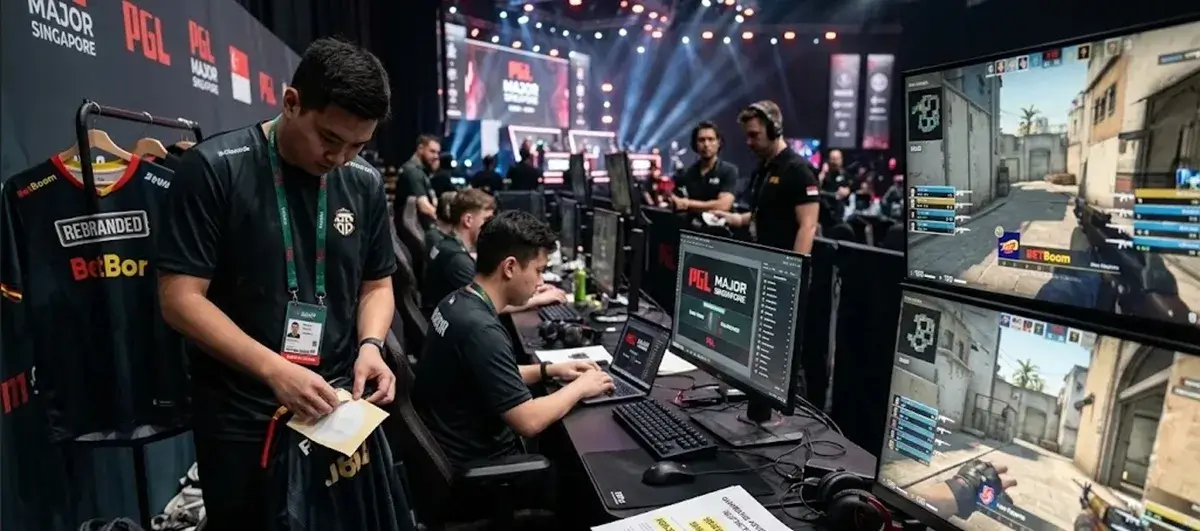
Singapore has become a popular hub for esports tournaments, but the country’s strict gambling laws cause some teams to change their names for the upcoming PGL Major Singapore 2026. The latter will be one of the biggest CS2 competitions of the year.
Four teams in total will be affected by these restrictions: PARIVISION, BETBOOM, 1win Esports and BC.Game. Their names are associated with different gambling operators and will have 24 hours to remove the gambling references, logos and in-game stickers.
All of this is due to the Gambling Control Act 2022, which prohibits the promotion of unlicensed gambling services. This also includes sponsorships and brand partnerships.
It’s worth noting that Singapore is not the only country that has such restrictions. There were several tournaments in places like China, where teams had to do the same if they wanted to compete. Every country has its own gambling laws and they are stricter in some parts of the world than in others.
Dominican Republic Identifies 7 Licensed Online Gambling Operators and 81 Unauthorized Platforms
Aside from Haiti, another Caribbean nation also came into the news. The Dominican Republic has identified a total of 7 licensed online gambling operators. Unfortunately, it also noted that there are nearly 81 unauthorized platforms offering services in the country.
This comes at a time when the country is looking to implement Law 86-26, which will introduce a new regulatory framework that focuses on strengthening gambling oversight.
With that said, there is a newly established Council of Gambling that has not approved any licensing fees, requirements and operating conditions yet. There is also no timeline for these changes, so companies will have to wait until they become a reality.
Considering there are so many unregulated sites available, the Dominican Republic may take serious action against them. Other countries are tightening their rules and this one will most likely do the same.
Argentina Is Pressured to Pass the Online Gambling Advertising Restrictions
The Catholic Church and lawmakers from the opposition are trying to urge the Senate to accept the strict online gambling regulations. They are trying to do that before the parliamentary session ends on November 30, 2026.
Assuming that the proposed bill passes, it will ban online gambling ads across TV, radio and social media. It will even include sports sponsorships and different promotional activities from influencers, athletes and celebrities.
Outside of that, there will be additional measures, such as a prohibition on welcome bonuses. Players also won’t be able to make credit card payments and the sites will be unavailable to people under the age of 18. Companies also have to implement facial recognition tech for identity verification and also comply with the self-exclusion system.
Whether all of the new laws will come into force remains to be seen. The bill retains parliamnentary status until March 2027, so we wouldn’t be surprised if there are more debates in the next couple of months.
Illegal Betting Website Traffic Increased 19 times in Britain since 2021

Illegal betting has always been an issue in Britain, but the most recent report from the International Federation of Horseracing Authorities revealed staggering numbers. According to the stats, the traffic to these sites has increased 19 times since 2021.
The study actually analyzed 310 betting sites, 221 of which were unlicensed. The latter recorded 19.4 visits for every 100 visits to licensed platforms. For comparison, these sites only had one visit per 100 in late 2021.
The overall monthly visits to illegal sites also increased drastically and reached 25M in 2025 (they were 1.8M in 2022). For comparison, traffic to licensed operators actually declined by 34%.
It also became clear that users are spending more time on unlicensed platforms, as their average visit increased by 32% since 2024. All of this means that illegal gambling traffic remains an issue despite all of the legislative changes from the last couple of years.
Kenyan Gambling Operators Challenge the New Licensing Fees and Capital Requirements
We found that the Association of Gaming Operators Kenya urged the country’s government to reconsider its plans for the new gambling regulatory framework. Its main concerns are increased licensing fees and minimum capital requirements.
Speaking of the new framework, online bookmakers will have to pay $38.5K for their application. The fees themselves are now $385K and will be valid for three years. Outside of that, operators must meet a minimum capital requirement of $770K.
The financial obligations are substantial and some people in Kenya believe they will be a barrier to market entry for many operators. This could mean that there will be an increase in the illegal platforms operating in the country.
Uganda Casino Operators Want to Change the 15% Tax on Players’ Winnings
The land-based casino operators in Uganda are urging the government to change its decision regarding the 15% withholding tax on player winnings. According to them, it will be very difficult to implement it in physical gambling venues. Instead, the Uganda Gaming Operators Association wants casinos to remain subject to the existing 30% GGR tax.
The withholding tax was introduced in early July this year. Although the idea behind it is interesting, implementing it is difficult because companies struggle to keep track of all their clients. Outside of that, the association believes that the new compliance cost could threaten around 2,500 jobs and push players to use unlicensed operators.
Egypt Plans to Have Stricter Online Betting Regulations Under the New Digital Safety Lsaw
Egypt is one of the countries with strict gambling laws and the country will introduce even stricter measures against online betting. They will be part of the Digital Safety Law that should reach the parliament this December.
Aside from targeting illegal betting sites and apps, the new law will also focus on brokers, promoters and individuals who access these sites. The law comes after the authority has already blocked more than 70 different operators and applications.
Keep in mind that the country does not have any regulated online gambling market yet. Some hotels, however, can provide these kinds of services to foreign passport holders.
Colombia Considers 19% VAT on Online Gambling Deposits Under New Tax Bill

Colombia’s government and Congress have begun discussions on a proposed tax reform. According to it, there will be a 19% VAT on online gambling deposits. They are part of the Economic Rescue Bill.
The legislation was submitted in late October 2026 and it aims to improve public finances through additional taxation and spending reductions. The operators will be the ones responsible for paying the tax.
Speaking of taxes, the new bill will also double specific taxable bases for land-based gambling establishments. It will also increase the tax on lottery, raffle and betting prizes to 30% (they were at 20% before).
According to some industry experts, the higher taxes could affect investments, employment, and the overall regulated gambling sector. Keep in mind that Colombia already introduced s similar gambling taxes before, but most of them were suspended.
EGT Opened a New Office in Rome
EGT, one of the leading casino software suppliers out there, opened a new office in Rome. The opening took place a few days ago and it included representatives from several major operators.
The company’s new office is located on Via Salaria and it features a special showroom that will display the company’s latest gaming machine cabinets. Furthermore, people will find an area that showcases EGT Digital’s online gaming solutions.
No comments added yet. Be the first!